INBDE Passing Score Explained: What 75 Really Means
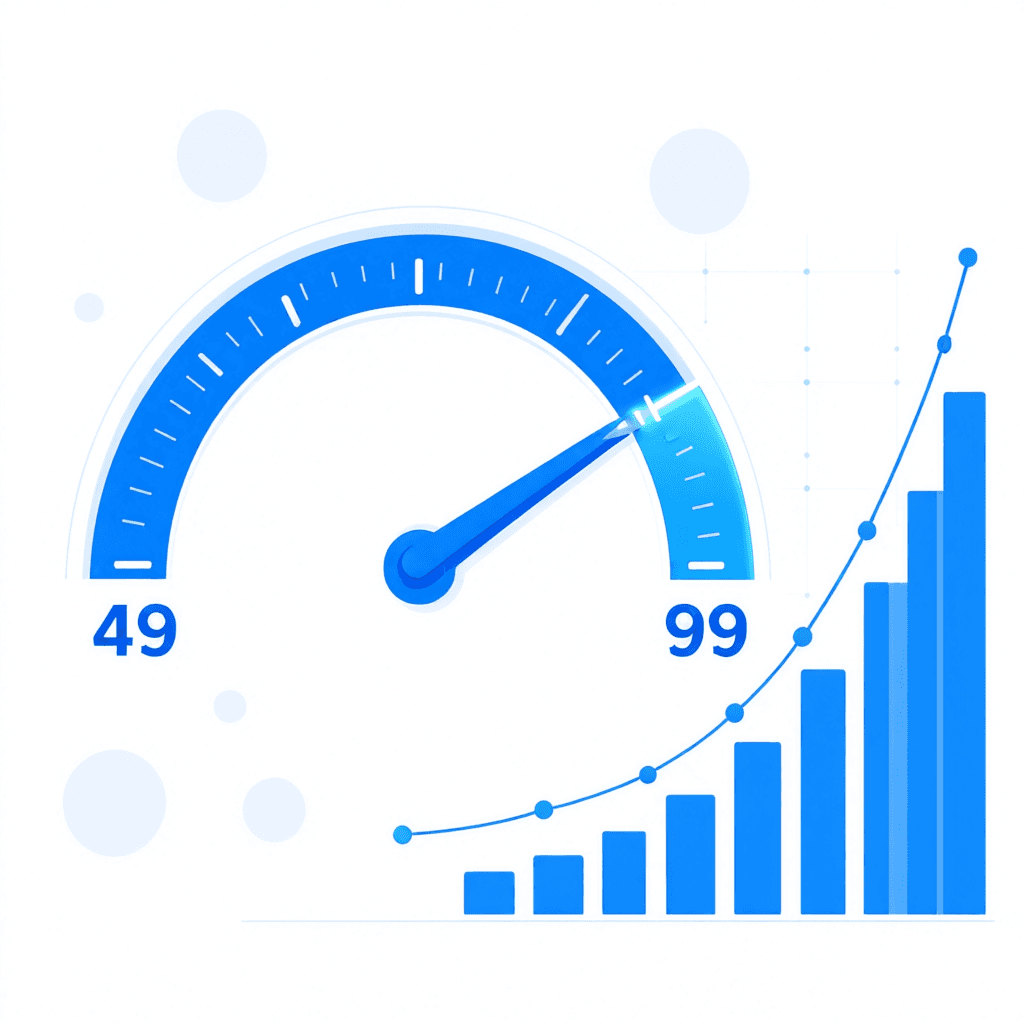
The INBDE reports a 49-99 scale score with 75 as the minimum passing score. A 74 does not mean one more correct answer would have passed. Here is how criterion-referenced scoring, 3PL IRT, and the 2024 standard raise actually work.
INBDE Passing Score Explained: What 75 Really Means
A 75 is not a B-plus. It is not a percentage. And if you score a 74, you almost certainly did not miss by one question. We have talked to too many students who left Prometric convinced they could calculate their raw score from how the exam felt, and almost all of them were wrong. This article explains how the 49-99 scale actually works, why the 2024 standard raise matters, and what your score report really tells you.
The 49-99 Scale and the 75 Cut
The INBDE reports scale scores from 49 to 99 in one-point increments. The passing score is 75. The score is not a percentage of questions answered correctly. The number 75 does not mean 75 percent correct.
If you pass, you see exactly one word: "Pass." If you fail, you see a scale score between 49 and 74 plus a 13-area performance profile that shows your relative weaknesses.
The scale is a reporting convention, not a raw count. JCNDE anchors the scale at each standard-setting cycle, so a 75 today may not represent the same raw performance as a 75 from a previous cycle. The score is designed to be comparable across forms within a cycle, not across years.
Why the Scale Runs from 49 to 99
The 49 to 99 range is a common convention in health professions licensing exams. It avoids negative numbers and gives enough granularity to separate candidates near the passing standard. The bottom of the scale does not mean zero percent correct; it simply represents the lowest reportable performance level. Similarly, 99 does not mean perfection. The scale is normalized so that the passing score of 75 sits at the point of minimally acceptable entry-level competence.
Criterion-Referenced, Not Curved
The INBDE is criterion-referenced. Your pass or fail depends on whether your performance meets a fixed standard of entry-level dental competence, not on how other candidates performed. The passing standard is set using the Bookmark method by a panel of subject-matter experts convened by JCNDE.
Each test form is equated to a common scale so that a 75 on one form represents the same level of competence as a 75 on another form. The equating process accounts for the fact that some forms contain harder or easier items. That is why two candidates who answer the same number of questions correctly can end up with different scale scores if the difficulty of their forms differs.
Bookmark Standard Setting and the 75 Re-Anchor
The passing standard is established through the Bookmark method. A panel of practicing dentists, dental educators, and other subject-matter experts reviews items in order of difficulty and places a bookmark at the point where a minimally competent candidate would be expected to answer correctly. The result is a raw-score cut that is then converted to the 75 passing scale score.
The 75 is re-anchored at each standard-setting cycle. When JCNDE convened a standard-setting panel in January 2024 and implemented the raise on June 1, 2024, the reported passing score stayed at 75, but the underlying performance required to earn a 75 increased. The scale number itself did not change; the competence it represents did.
Three-Parameter IRT Scoring
The exam uses three-parameter item response theory (3PL IRT). Each item is modeled by three parameters:
- Difficulty: How hard the item is.
- Discrimination: How well the item separates higher-performing from lower-performing candidates.
- Guessing: The chance a low-performing candidate answers correctly by guessing.
Because IRT weights items by difficulty and discrimination, the raw number of correct answers does not map cleanly to a scale score. A candidate who answers many hard items correctly and misses easy items may score differently than a candidate with the same raw count but a different mix of difficulty. The guessing parameter also adjusts for items where even a weak candidate has a reasonable chance.
Compensatory Scoring
The INBDE is compensatory. The pass or fail decision rides on the single overall scale score, not on passing every subarea. A strong performance in Oral Health Management can offset a weaker performance in a Foundation Knowledge area. The 13-area profile is for remediation, not for subarea pass/fail decisions.
This is good news for students who have one weak area. It is also a warning that a thin overall score fails even if every area looks acceptable. The exam is designed to measure entry-level competence across the whole Domain of Dentistry, not perfection in every topic.
What a 74 Does and Does Not Mean
A common reaction to a 74 is "I must have missed by one question." That is not how the score works. Because the exam uses IRT and equating, the gap between 74 and 75 reflects a difference in estimated competence, not a raw count of items. You could have answered several more easy items and still fallen short if you missed harder, more discriminating items. Conversely, you could have answered fewer items overall but passed if the items you answered were the ones that best measure competence.
No Unofficial Score at the Test Center
You will not receive an unofficial score when you leave Prometric. Results arrive online via DENTPIN in about 3 to 4 weeks. There is no printout, no instant feedback, and no way to estimate your result from how the exam felt.
The DAT used to provide an unofficial printout, but that ended March 1, 2025. Do not import that expectation into the INBDE. Post-exam dread is universal and non-predictive. Many students who were convinced they failed ended up passing.
Score Release Practicalities
After you finish Day 2, your results enter a processing window. JCNDE reports officially that results are available in about 3 to 4 weeks, and most students see them within that range. Check the DENTPIN portal daily starting around 2.5 weeks after the exam. There is no guaranteed email, and the exact timing varies. Once released, passers see a single word. Failers see the scale score and the 13-area profile.
If you believe a scoring error occurred, you can request a results audit for $105 within 30 days. The audit takes 4 to 6 weeks and is non-appealable. Audits do not change the standard; they only verify that your responses were scored correctly.
The 13-Area Fail Profile
Candidates who fail receive a performance profile across 13 areas: the 3 clinical content sections (Diagnosis and Treatment Planning, Oral Health Management, Practice and Profession) and the 10 Foundation Knowledge areas. The profile is graphical and shown on a common scale against national averages for remediation purposes. It is designed to guide study, not to imply that you must pass every subarea.
The profile is most useful when it shows a clear outlier. If pharmacology and practice management are well below average, that is where your next study block should start. If you are near average everywhere, the problem may be pacing, fatigue, or test-taking strategy rather than content gaps.
Score History Is Always Visible
Every INBDE results report includes your full history of NBDE Part I, Part II, and INBDE attempts. Pre-2012 attempts may still show numeric scores. Results are retained indefinitely and cannot be voided. Licensing boards and schools authorized by you can see the complete history.
This is why first-attempt passing carries real value for advanced-standing applicants. Programs such as Boston University explicitly prefer first-attempt passes because official reports show every attempt with dates. A retake is not a private do-over. It is a permanent part of your professional record.
The June 2024 Standard Raise
JCNDE convened a 10-member standard-setting panel in January 2024, approved the raise on May 17, 2024, and implemented it on June 1, 2024. The reported passing score stayed at 75, but the actual performance required to earn a 75 increased.
Here are the failure rates that resulted:
- CODA first-time candidates: 0.4% failed in 2023, 4.8% in 2024, and 7.2% in 2025.
- Non-accredited first-time candidates: 15.9% failed in 2023, 25.3% in 2024, and 34.9% in 2025.
- CODA retake candidates: 14.0% failed in 2023, 32.1% in 2024, and 27.0% in 2025.
- Non-accredited retake candidates: 33.8% failed in 2023, 52.8% in 2024, and 50.5% in 2025.
The old advice that the INBDE is nearly impossible to fail is now outdated. The exam is still passable, but it requires deliberate preparation.
How to Use Score Information for Study
If you pass, celebrate and move on. The score report will not tell you anything else. If you fail, treat the 13-area profile as a data map, not a verdict. The overall scale score tells you how far you are from the standard. The profile tells you where to focus.
Use the profile to build a targeted study plan. Switch to question-based prep, keep a written error log, and complete at least two full-length two-day simulations before the retake. The standard has changed, so the same plan that produced the first score will probably produce the same score again.
If you need a prep platform, Crack the Dental Boards offers a large question bank with detailed explanations and full-length mock exams that match the current standard. We built it because we wished we had something this focused when we were studying.
A 75 on the INBDE is a criterion-referenced passing standard, not a percentage. The score is derived from 3PL IRT, forms are equated to a common scale, and passers receive only the word "Pass." The June 2024 standard raise made the exam more selective. Prepare with a large, explanation-rich question bank and full-length mock exams rather than guessing at your score.
Ready to crack the iNBDE?
Crack the Dental Boards gives you 6 full-length iNBDE mock exams, 7,000+ exam-style questions, 70+ hours of video crash courses, 100,000+ flashcards, and a complete study engine: Adaptive Quiz Generator, Adaptive Flashcard Generator, AI Tutor, Homework Helper, YouTube Summarizer, and Study Schedule Creator. Everything is aligned to the official iNBDE blueprint and comes with unlimited tokens, unlimited credits, no throttling, unlimited access, and unlimited usage. No subscriptions, no usage caps.
No credit card required for the free trial. One-time payment for full access.
Related articles
The iNBDE: Complete Exam Guide for Dental Students
A complete guide to the Integrated National Board Dental Examination (iNBDE): 500 items, two days, the 49-99 scale with 75 passing, the June 2024 standard raise, and what the exam means for U.S. licensure.
iNBDE BasicsiNBDE Registration and Scheduling: A Step-by-Step Guide
A complete walkthrough of INBDE registration and scheduling: DENTPIN setup, JCNDE application, fees, eligibility windows, Prometric booking, ID rules, and reschedule costs.
iNBDE BasicsINBDE Day 1 and Day 2 Format: Timing, Pacing, and Break Strategy
A full breakdown of the INBDE two-day format: 500 items across 12.5 hours, Day 1 vs Day 2 timing, pacing, breaks, back-to-back scheduling, and the Prometric Test Drive.
Turn strategy into a passing iNBDE score
6 full-length iNBDE mock exams, 7,000+ questions, 70+ hours of video, and unlimited AI tools. Start today.
Unlock Everything